
ART.1: Seamless, Safe, and Easy: A Radiation Oncologist's Perspective

Offline ART Remains the Go-To Approach
As a radiation oncologist, I've seen the challenges of offline adaptive radiotherapy (ART) firsthand. Every department seems to have its own “secret sauce” for when to adapt a plan, and quite honestly, it all seems a little bit heuristic about what's being applied. That variability told me one thing: there's no universal standard, and that can make consistent, high-quality care difficult to achieve.
No Universal Solution
For head and neck cancer especially, approaches vary widely. Some clinicians replan every three weeks, others wait for visible changes, and many rely solely on daily imaging. This patchwork of practice underscores the need for a more objective, data-driven way to guide adaptation decisions - one that fits naturally into the clinical workflow rather than adding to it.
ART.1: Intelligent, Automated Clinical Insight
That's where ART.1 comes in. Having a two-way conversation with radiation oncologists to drive the core requirements for ART.1 was essential. ART.1 automates the detection and evaluation of anatomical change in real time. A simple traffic-light dashboard - green, yellow, red - lets you see immediately which patients need attention. In minutes, you can review dose metrics, assess structure changes, and determine whether a replan is necessary or if the variation is simply physiological.
I've seen it catch what looked like a potential replan case - only to reveal a simple bladder-volume issue fixed through patient education. Conversely, ART.1 has flagged subtle, cumulative spinal cord shifts that signaled genuine need for adaptation.
Purpose-Built. Value Delivered.
ART.1 replaces guesswork with clarity because its underlying architecture was developed exactly for this purpose. If you can't justify the large investment required for an online system, ART.1 will help you avoid the process of adapting blindly, or trying to retrofit a bunch of pieces of technology together and involving a lot of peripherals. ART.1 turns what used to take hours into minutes, giving clinicians the confidence - and the paper trail - to adapt only when it truly benefits the patient. It's really exciting to see something designed for this purpose that's entirely software based, without being intrusive on the clinician's time.
“Ten minutes a day in ART.1 is far better than hours of manual reviews and ensures patients get adaptive care when they truly need it.”
Related news
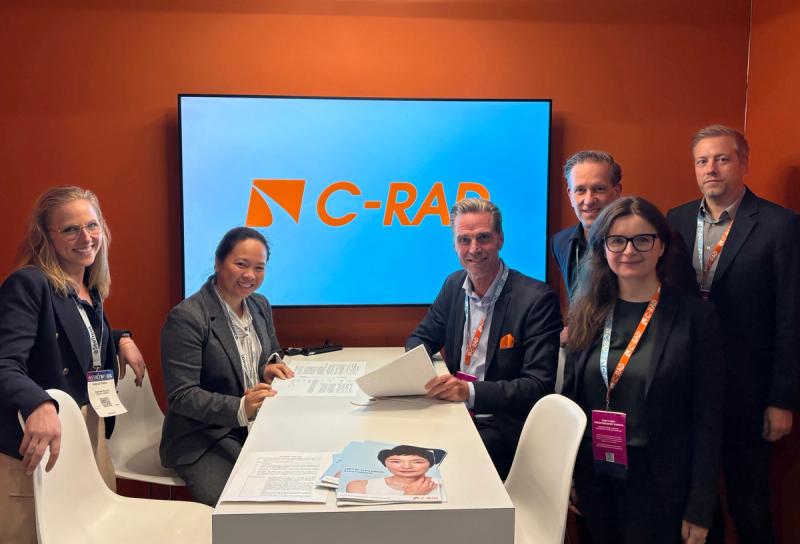
 Dr Trang Nguyen29 September 2026
C-RAD and SeeTreat partner to co-develop personalised radiotherapy for every patient in every clinic
C-RAD and SeeTreat partner to co-develop personalised radiotherapy for every patient in every clinic UPPSALA, Sweden/SYDNEY, Australia – September 29, 2026 – C-RAD (publ) the global leader in surface-guided radiation therapy (SGRT), and SeeTreat Pty Ltd, a pioneer in the adaptive decision support radiotherapy (ART) software, today confirm a partnership to co-develop more connected, intelligent, and patient-centric radiotherapy workflows.
Read more
 Dr Sean Pollock17 September 2026
ABC Radio National interview - Changing Australia: Paul Keall and innovating with radiotherapy
SeeTreat co-founder Professor Paul Keall speaks with Sally Sara on innovating with radiotherapy. Prof Keall writes of this interview: "It was an honour to be invited to contribute to the ABC's Changing Australia series hosted by Sally Sara. On the question of how to bring innovations in radiotherapy to large numbers of patients I am proud that we at SeeTreat are doing just that: developing accessible technology to ensure that the radiation treatment is personalised to the patient throughout their course of therapy."
Read more
 Antonia Dalton19 May 2026
SeeTreat's ART.1-US Software is FDA Cleared for clinical use in the USA
SYDNEY, May 18, 2026 /PRNewswire/ -- SeeTreat's ART.1-US software delivering automated adaptive decision support for every patient at every treatment is cleared for use in the USA. From today, US clinics with Varian or Elekta CT linear accelerators, will be able to access daily evaluations of radiotherapy dose to patients' changing anatomy. With ART.1-US, clinical teams can now decide the right time for a new radiotherapy plan in 95+ seconds[1], and download supporting clinical documentation.
Read more