
Breaking Down Adaptive Radiation Therapy: A Call to Action

Adaptive Radiation Therapy (ART) has been a concept in radiation oncology for nearly three decades, yet its widespread implementation remains limited. The foundation of ART can be traced back to a pivotal paper published 28 years ago by Di Yan and colleagues at William Beaumont Hospital in Michigan. Their study demonstrated the potential of using multiple CT scans to refine treatment planning for individual patients. Despite the clear benefits of this approach, ART is still not routinely available in a fast, automated, and cost-effective manner. This underscores the urgent need to expand access to this transformative technology.
The Complexity of Adaptive Radiation Therapy
The ART workflow can be defined in three key steps:
- See - In radiation therapy, this involves acquiring daily patient images.
- Think - Clinicians analyze these images to determine if an adaptation is necessary.
- Act - Treatment plans are either continued or modified based on real-time assessments.
There are three primary timescales in ART:
- Offline ART - Adjustments made between treatments.
- Online ART - Adjustments made before a treatment session begins.
- Real-time ART - Adjustments occurring dynamically during treatment.
Each approach involves multiple decision points, such as evaluating treatment contours, clinical objectives, and quality assurance benchmarks. The complexity of ART means that while it holds great promise, its integration into clinical workflows remains a challenge.
The Global State of ART Adoption
A recent ESTRO study surveyed 177 institutions across 40 countries, revealing that while 61% of centers perform ART, only 6% conduct online daily replanning. Furthermore, 80% of institutions have access to ART tools, but only 3% of patients in Australia, for example, receive adaptive treatments. This gap highlights the pressing need for streamlined, scalable solutions.
Barriers to ART Implementation
Three major barriers to widespread ART adoption were identified:
- Human Resources - The specialized expertise required is often in short supply.
- Technical Limitations - The complexity of integrating ART into clinical workflows.
- Equipment and Financial Constraints - The high costs associated with ART technologies.
To overcome these barriers, ART solutions must be automated, accurate, and cost-effective. Current workflows introduce additional resource strain, making it clear that existing models are not globally scalable.
Moving Forward
The need for ART is undeniable. With growing access to advanced tools, the priority now is making ART efficient, accessible, and sustainable for all patients. By focusing on offline ART as the first step, we can bridge the gap and ensure more patients benefit from personalized, adaptive treatment plans. This is a call to action for the industry to innovate and scale ART solutions that can transform cancer care on a global level.
To learn more about expanding global access to offline adaptive radiotherapy, watch the on-demand webinar with Prof. Paul Keall, Chief Scientific Officer at SeeTreat, as he discusses this important topic.
Related news
 Dr Trang Nguyen29 September 2026
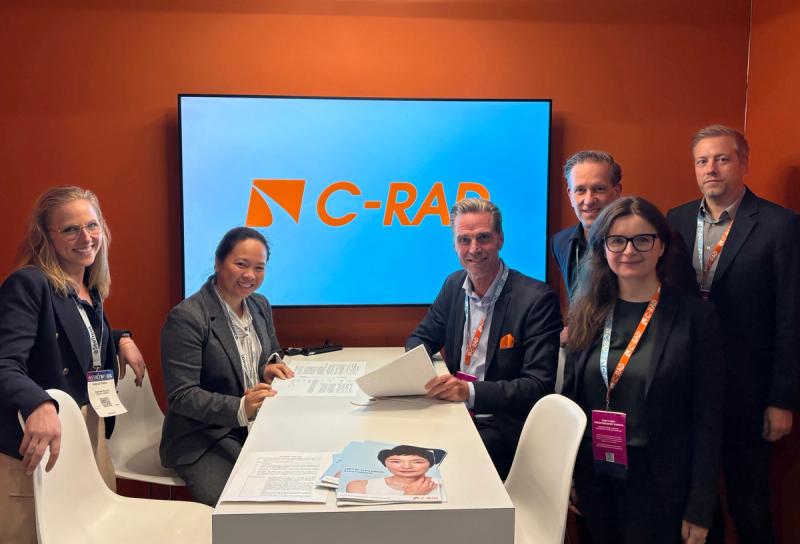
C-RAD and SeeTreat partner to co-develop personalised radiotherapy for every patient in every clinic
C-RAD and SeeTreat partner to co-develop personalised radiotherapy for every patient in every clinic UPPSALA, Sweden/SYDNEY, Australia – September 29, 2026 – C-RAD (publ) the global leader in surface-guided radiation therapy (SGRT), and SeeTreat Pty Ltd, a pioneer in the adaptive decision support radiotherapy (ART) software, today confirm a partnership to co-develop more connected, intelligent, and patient-centric radiotherapy workflows.
Read more
 Dr Sean Pollock17 September 2026
ABC Radio National interview - Changing Australia: Paul Keall and innovating with radiotherapy
SeeTreat co-founder Professor Paul Keall speaks with Sally Sara on innovating with radiotherapy. Prof Keall writes of this interview: "It was an honour to be invited to contribute to the ABC's Changing Australia series hosted by Sally Sara. On the question of how to bring innovations in radiotherapy to large numbers of patients I am proud that we at SeeTreat are doing just that: developing accessible technology to ensure that the radiation treatment is personalised to the patient throughout their course of therapy."
Read more
 Antonia Dalton19 May 2026
SeeTreat's ART.1-US Software is FDA Cleared for clinical use in the USA
SYDNEY, May 18, 2026 /PRNewswire/ -- SeeTreat's ART.1-US software delivering automated adaptive decision support for every patient at every treatment is cleared for use in the USA. From today, US clinics with Varian or Elekta CT linear accelerators, will be able to access daily evaluations of radiotherapy dose to patients' changing anatomy. With ART.1-US, clinical teams can now decide the right time for a new radiotherapy plan in 95+ seconds[1], and download supporting clinical documentation.
Read more