
What the Radiation Oncology Community is Saying About Adaptive Radiotherapy (ART): Insights from SeeTreat's LinkedIn Polls

Offline ART Remains the Go-To Approach
Although online ART continues to generate buzz, most respondents indicated they are still using offline ART—33% with treatment planning or QA software, and 28% with other offline tools. Online ART adoption came in at 22% using a standard Linac and only 17% using an MR Linac. This reflects ongoing concerns about workflow integration, cost, and the complexity of online adaptive solutions.
Head & Neck is the Leading Application
When asked which anatomical site clinicians are most eager to apply ART to, head and neck led overwhelmingly (64%), followed by prostate (25%), lung (7%), and breast (4%). These responses echo conversations at ESTRO 2025, where clinicians pointed to the precision needs of anatomically complex, high-motion regions such as head and neck.
Strong Interest in Daily Dose Accumulation
In our final poll, we asked: If there were an efficient, accurate way to perform daily dose accumulation, would you use it? Every respondent said yes — underscoring a universal interest in more advanced, yet practical, ART tools.
What's Next?
These poll results echo what institutions report globally: while the clinical rationale for ART is clear, the operational burden is high. For example, traditional offline adaptive workflows can take up to 5 days to complete due to the manual effort required across multiple software platforms and team members. There's a growing call for intelligent, integrated solutions that reduce this burden and enable faster, evidence-based replan decisions—ideally in minutes, not days.
ART.1 from SeeTreat is Closing the Gap
ART.1 is purpose-built software for Adaptive Radiotherapy that automates the most resource-intensive components of adaptive workflows. ART.1 enables a more streamlined, scalable approach to broadening access to and accelerating adaptive workflows. To learn more, ask for a demo.
Thanks to everyone who joined the conversation. If you haven't yet, follow SeeTreat on LinkedIn. We're just getting started!
Note: These results are based on a limited LinkedIn sample of 62 participants and are intended to provide a snapshot of current perspectives, not a comprehensive industry survey. Still, they offer a valuable pulse on where interest and challenges lie as ART continues to evolve.
Related news
 Dr Trang Nguyen29 September 2026
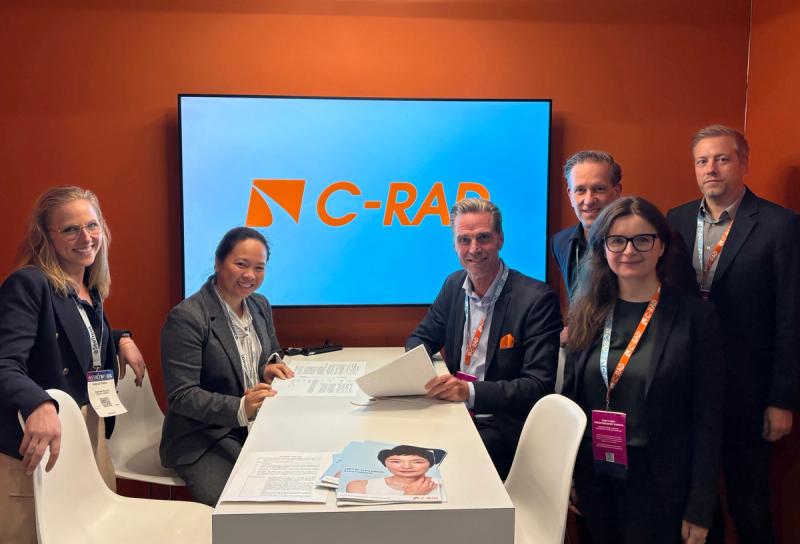
C-RAD and SeeTreat partner to co-develop personalised radiotherapy for every patient in every clinic
C-RAD and SeeTreat partner to co-develop personalised radiotherapy for every patient in every clinic UPPSALA, Sweden/SYDNEY, Australia – September 29, 2026 – C-RAD (publ) the global leader in surface-guided radiation therapy (SGRT), and SeeTreat Pty Ltd, a pioneer in the adaptive decision support radiotherapy (ART) software, today confirm a partnership to co-develop more connected, intelligent, and patient-centric radiotherapy workflows.
Read more
 Dr Sean Pollock17 September 2026
ABC Radio National interview - Changing Australia: Paul Keall and innovating with radiotherapy
SeeTreat co-founder Professor Paul Keall speaks with Sally Sara on innovating with radiotherapy. Prof Keall writes of this interview: "It was an honour to be invited to contribute to the ABC's Changing Australia series hosted by Sally Sara. On the question of how to bring innovations in radiotherapy to large numbers of patients I am proud that we at SeeTreat are doing just that: developing accessible technology to ensure that the radiation treatment is personalised to the patient throughout their course of therapy."
Read more
 Antonia Dalton19 May 2026
SeeTreat's ART.1-US Software is FDA Cleared for clinical use in the USA
SYDNEY, May 18, 2026 /PRNewswire/ -- SeeTreat's ART.1-US software delivering automated adaptive decision support for every patient at every treatment is cleared for use in the USA. From today, US clinics with Varian or Elekta CT linear accelerators, will be able to access daily evaluations of radiotherapy dose to patients' changing anatomy. With ART.1-US, clinical teams can now decide the right time for a new radiotherapy plan in 95+ seconds[1], and download supporting clinical documentation.
Read more