
What's Holding Back Adaptive Radiation Therapy? A Look at the Tools Needed.

A Look at the Tools Needed
Adaptive radiation therapy (ART) holds immense potential to improve cancer care by reducing treatment-related toxicity and lowering recurrence rates. However, despite its clear clinical and economic benefits, adoption remains limited. In Australia, for example, only about 3% of patients currently receive adaptive radiotherapy, leaving 97% without access to this enhanced approach. A key reason is the significant number of technical tools, processes, and human resources required to deliver ART effectively.
Essential Tools for Adaptive Radiation Therapy
First, let's start with some good news: Clinically Significant Adaptive Triggers
One of the most critical elements is identifying when a patient needs adaptation. Fortunately, recent research, such as the Energy Oncology review on ART, has provided strong clinical guidelines. These guidelines quantify what constitutes a significant change - whether it's a shift in the gross tumor volume (GTV), the planning target volume (PTV), critical structures, or major anatomical changes - helping clinicians make objective decisions about when to replan.
In-Room Imaging
Access to in-room imaging technology is essential for ART. The good news is that 80% of centers surveyed by ESTRO report having in-room imaging available. Imaging provides the necessary daily snapshots of patient anatomy to guide decisions about whether adaptation is required.
Unfortunately, access to more specific tools remains limited, creating key barriers to broader ART adoption: Deformable Image Registration and Contour Propagation
Adaptive radiotherapy often involves significant anatomical changes during the treatment course. For example, tumors can shrink substantially by the 12th treatment fraction, creating localized deformation. Accurate deformable image registration, which maps these anatomical changes and allows the propagation of treatment contours, is essential. Key performance metrics include the target registration error and clinician contour evaluation accuracy. Developing automated, reliable image registration solutions remains a technical hurdle for widespread ART adoption.
Synthetic CT Generation and Dose Calculation
Most adaptive workflows rely on cone beam CT (CBCT) imaging, but CBCTs can have a limited field of view and may have artifacts—especially in head and neck patients with dental fillings. To calculate accurate doses, clinicians need high-quality synthetic CTs derived from these CBCTs. These synthetic scans allow for proper dose recalculation and clinical decision-making based on how anatomical changes might impact treatment.
Decision Support and Automation
Perhaps the most significant enabler of scalable ART is automation. Clinicians need decision support tools that can integrate imaging data, clinical guidelines, and historical evidence to automate the triaging process. Ideally, the system would flag patients for immediate replanning (red light), ongoing monitoring (orange light), or continuation without changes (green light). Continuous, automated evaluation ensures every patient is assessed every day — something manual processes simply cannot achieve efficiently.
Moving Forward
Offline adaptive radiotherapy represents one of the most urgent needs in modern radiation oncology. It promises significant benefits for both patients and healthcare systems by improving outcomes and reducing overall costs of care. However, to unlock these benefits, access to key technologies - and overcoming technical and automation barriers - is critical.
At SeeTreat, we are working toward innovative solutions that address each of these challenges, making offline ART more accessible and practical for clinics worldwide.
Related news
 Dr Trang Nguyen29 September 2026
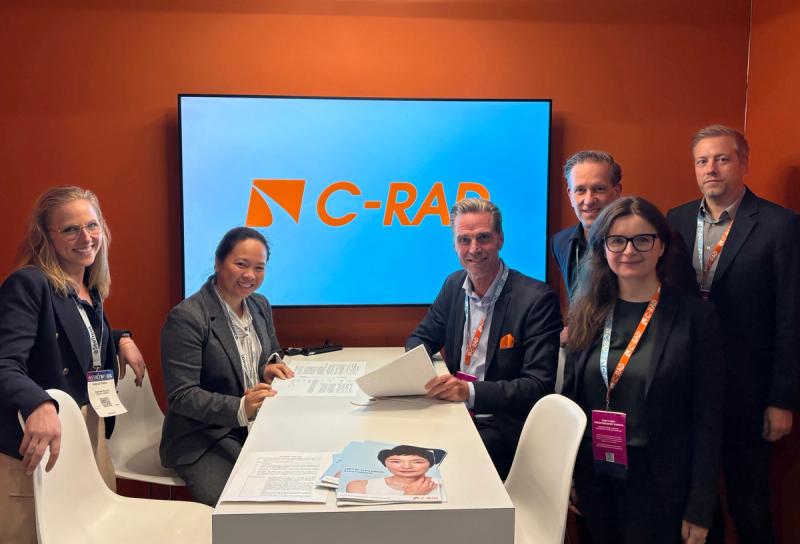
C-RAD and SeeTreat partner to co-develop personalised radiotherapy for every patient in every clinic
C-RAD and SeeTreat partner to co-develop personalised radiotherapy for every patient in every clinic UPPSALA, Sweden/SYDNEY, Australia – September 29, 2026 – C-RAD (publ) the global leader in surface-guided radiation therapy (SGRT), and SeeTreat Pty Ltd, a pioneer in the adaptive decision support radiotherapy (ART) software, today confirm a partnership to co-develop more connected, intelligent, and patient-centric radiotherapy workflows.
Read more
 Dr Sean Pollock17 September 2026
ABC Radio National interview - Changing Australia: Paul Keall and innovating with radiotherapy
SeeTreat co-founder Professor Paul Keall speaks with Sally Sara on innovating with radiotherapy. Prof Keall writes of this interview: "It was an honour to be invited to contribute to the ABC's Changing Australia series hosted by Sally Sara. On the question of how to bring innovations in radiotherapy to large numbers of patients I am proud that we at SeeTreat are doing just that: developing accessible technology to ensure that the radiation treatment is personalised to the patient throughout their course of therapy."
Read more
 Antonia Dalton19 May 2026
SeeTreat's ART.1-US Software is FDA Cleared for clinical use in the USA
SYDNEY, May 18, 2026 /PRNewswire/ -- SeeTreat's ART.1-US software delivering automated adaptive decision support for every patient at every treatment is cleared for use in the USA. From today, US clinics with Varian or Elekta CT linear accelerators, will be able to access daily evaluations of radiotherapy dose to patients' changing anatomy. With ART.1-US, clinical teams can now decide the right time for a new radiotherapy plan in 95+ seconds[1], and download supporting clinical documentation.
Read more